Wednesday, February 13, 2013

People Reading Secrets of Special Agents

Here is a link to a fabulous article called How to Read People in Psychology Today. Learn about the three master people readers: Joe Navarro, J.J. Newbury and Jack Shafer. These three work in the world of criminal investigations and are experts at determining when a suspect is lying.

Here are some tips for setting the stage:
  • Shut Up: You’re in control when they’re talking, because you’re getting the information,” says J.J. Newberry. And don’t miss critical clues because you’re composing your next question. Sounds elemental? It’s the bane of law enforcement officers and journalists alike.
  • Set Up: Position and location matter. Women are most comfortable when seated directly across from an interlocutor. Men prefer to be at an angle relative to an interviewer. If your interviewee appears anxious, linger outside the room where you are scheduled to converse. A person may offer information just to avoid entering the room itself. Navarro calls this a “door jamb” confession. And a person exiting a room may feel guilty about wasting your time and concede a few unexpected morsels.
  • Change Perspective: People gear up for a verbal altercation. Have someone draw or act out an event—these actions can bring inconsistencies to light.
  • Get the Story Backwards: Reversing chronology forces a “frame by frame” recollection, rather than a reliance on knowledge of how events usually transpire. Reverse recall can trip up a liar and unearth forgotten or dormant information.

Thursday, January 24, 2013

The Face of a Killer

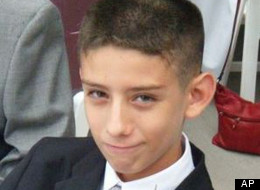
Are there "tells" in the faces of killers? This morning I happened across this photo of Nehemiah Griego, the 15-year old New Mexico teen accused of killing his family and plotting to randomly gun down Wal-Mart shoppers. What do you see in his face?

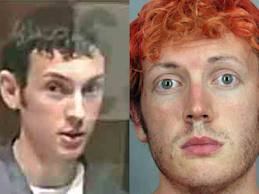
How does it compare to Adam Lanza, the Sandy Hook gunman? How about James Holmes, the Aurora movie theater gunman?

I see contempt in Nehemiah's face. Note the pointed and commanding look in his eyes and his lips (tight and left corner slightly pointed up).

I also see what we call "head down, eyes up" posture which also reflects contempt, what my husband Mike refers to as "seething contempt."


Body Language expert Jack Brown suggests we pay attention to the "white and wild stare" as seen in Adam Lanza picture and also in James Holmes. According to Brown, "when the central forehead is also contracted along with widely opened eyes and displayed chronically should send a loud alarm."

Sunday, November 11, 2012

Excessive Blinking - What does it mean?


We know that excessive eye blinking is typically a sign of stress.  When combined with other facial and language clues, these eye movements can be even more telling.

I decided to do this post after watching last Sunday's Meet the Press and in particular the excessive eye blinking of House Leader Eric Cantor. Cantor combines excessive eye blinking with raised "Driver" brows.

Expressives and Drivers often raise their eyebrows, accentuating lines across the forehead. You can tell the difference between a Driver and an Expressive by their eyes. When Drivers raise their brows, the eyes tend to stay small. When Expressives do it, the eyes are much bigger.  See the picture on the left? Compare that one to Eric Cantor. Now look at the lines across the forehead. Notice that Cantor's are relatively straight, while the man on the left has a "V" with arches over each brow.

So we know that Cantor is a Driver and feeling a bit of stress. That's natural for someone being interviewed. What else can we surmise?  Let's take a look at body language research in this area and see what we can find.

Consensus on excessive blinking:

  1. Blink rate tends to increase when people are uncomfortable or feeling stressed. 
  2. Some feel excessive blinking is a sign of lying, but in my experience, the opposite effect - excessive staring is more telling. Liars typically work hard to control their expression and tend to force their eyes to stay open and appear to stare. 
  3. Blinking can also be a sign of unconscious rapport. 
  4. Rapid blinking psychologically blocks vision which can an arrogant signal saying "I'm so important, I do not need to see you." When combined with the Driver raised brows, this one seems especially probable. 
  5. Cognitive neuroscientist Daniel Smilek at the University of Waterloo, found that blink rate increases when the mind wanders. The brain is actually shutting out information. 
The participants blinked more when their minds were wandering than when they were on task, the team reports inPsychological Science, a journal of the Association for Psychological Science. “What we suggest is that when you start to mind-wander, you start to gate the information even at the sensory endings — you basically close your eyelid so there’s less information coming into the brain,” says Smilek.


Daniel Smilek, Jonathan S.a. Carriere, J. Allan Cheyne.Out of Mind, Out of Sight: Eye Blinking as Indicator and Embodiment of Mind Wandering. Psychological Science, 2010; DOI: 10.1177/0956797610368063

So...when we put all of this together, what can we "read" from Eric Cantor.  He's stressed or uncomfortable, he's a Driver and somewhat arrogant. His blinking wasn't rapport building with David Gregory. I would argue that his mind wasn't wandering either. That just doesn't seem to fit. What do you think?